CNG Kit Safety: Factory-Fitted vs Dealer-Fitted vs Aftermarket
Factory-fitted CNG is the most integrated option, because the manufacturer designs, tests and calibrates the system with the car. Dealer-fitted CNG is a good middle route when an authorised network installs an approved kit. Aftermarket CNG can also be safe, but only when the kit is approved for your exact car, the installer is qualified, the system is calibrated properly and the paperwork is completed.
Three Ways to Get CNG in India
CNG can reduce running costs a lot, and in India you can get it in three ways:
- Factory-fitted CNG: the car is designed and built with the CNG system as part of the vehicle
- Dealer-fitted CNG: an authorised dealership or its approved vendor installs a retrofit system on a petrol model
- Aftermarket CNG: a qualified retrofit installer converts an existing petrol car
All three can use certified components, but they are not the same in engineering, warranty or installation. So the real question is not “Is CNG safe?” It is “Is this CNG system right for this car, and was it fitted properly?”
Factory vs Dealer vs Aftermarket CNG at a Glance
| Factor | Factory-Fitted | Dealer-Fitted | Aftermarket |
| Vehicle integration | Designed into the vehicle | Retrofit through an authorised channel | Independent retrofit |
| Installation | Manufacturer production process | Authorised installer | Depends on the installer |
| Calibration | Vehicle-specific | Vehicle-specific if approved | Must be vehicle-specific |
| Warranty | Manufacturer warranty applies | Depends on manufacturer and dealer terms | Can affect remaining warranty |
| Component choice | Manufacturer specified | Approved or recommended system | Buyer and installer select the system |
| Vehicle approval | Part of vehicle certification | Application-specific | Application-specific |
| Paperwork | Included with vehicle registration | Usually dealer-assisted | Buyer and installer must complete correctly |
| Main concern | Higher purchase cost | Understanding warranty and approval scope | Installer quality and correct documentation |
This table does not mean every aftermarket conversion is unsafe or every dealer installation is automatically better. A properly approved aftermarket system fitted by a qualified installer is very different from a cheap, poorly documented conversion.
Factory-Fitted CNG: Integrated With the Vehicle
A factory-fitted CNG car is designed around its CNG system. The manufacturer controls how the cylinder, fuel lines, wiring, engine calibration and safety systems work together, and it tests the complete vehicle.
Maruti Suzuki’s S-CNG range uses dedicated CNG hardware and engine calibration. Tata’s iCNG range uses its own integration, including twin-cylinder packaging on applicable models. For real-world numbers on a factory CNG SUV, see our Maruti Brezza CNG mileage guide.
Depending on the model, factory systems can also offer automatic changeover between petrol and CNG, fuel-system shut-off functions and protection against starting the engine while refuelling. For a new car buyer, it also removes the uncertainty about installation quality.
The trade-off: factory CNG usually costs more than the petrol version, and you are limited to the models and variants that offer it. You cannot buy any petrol car and add a factory-style system later.
Dealer-Fitted CNG: The Middle Ground
Dealer-fitted CNG sits between a factory system and an independent conversion. A brand offers a retrofit for a petrol model that has no factory CNG version, and the kit is installed through its authorised network instead of an unrelated local workshop.
Several brands have taken this route. Honda, Nissan and Renault officially offer company-backed CNG kits for cars that were not sold with one, and Citroen’s C3 retrofit is done at authorised dealerships using OEM-approved components. Renault’s kits for the Kwid, Triber and Kiger go in through preferred vendors using homologated equipment, with a three-year warranty on the retrofit. Kia dealers previously offered the Carens with a Lovato CNG kit. However, Carens and Carens Clavis are now available with factory-fitted CNG kit. Availability, kit brand and warranty terms differ by brand, state and dealership, so confirm the current offer locally.
The key point is that dealer-fitted does not automatically mean factory-engineered. The kit may come from a third-party manufacturer, so the quality of the result depends on the kit, the approved application and the installation process.
Before you agree to a dealer retrofit, ask:
- Which company makes the CNG kit?
- Is it approved for your exact vehicle, engine and variant?
- Who will actually install it?
- What warranty remains on the petrol engine and other vehicle parts?
- What warranty covers the CNG components specifically?
- Who completes the registration and fuel-type endorsement paperwork?
- Where will the car be serviced if the CNG system develops a fault?
Get the warranty position in writing before you pay.
Aftermarket CNG: What You Need to Know
An aftermarket kit is fitted to a petrol car that was not built with CNG. It is a common route for older cars, especially when the manufacturer offers no factory or dealer CNG option for that model.
The systems are not universal. Each one has to be matched to the engine and calibrated for that particular vehicle.
How Much Does an Aftermarket CNG Kit Cost?
The cost of a CNG conversion depends on the type of system and the car. As a broad 2026 reference:
| System type | Indicative fitted price |
| Conventional | Rs 30,000 to Rs 35,000 |
| Sequential | Rs 40,000 to Rs 70,000 |
| Direct injection | Rs 1.25 lakh to Rs 1.50 lakh |
These are indicative ranges, not fixed prices. The final quote changes with the vehicle, cylinder, components, installation, calibration, documentation and taxes. Compare the complete fitted quotation, not just the kit price, and check what each quote includes.
What Is Inside a CNG Kit and What Each Part Does
A modern sequential CNG system has several parts working together. Knowing what they do helps you judge a quotation and a workshop.
The kit images in this guide were provided by MIJO Auto Gas. MIJO is one example of a sequential kit manufacturer, and you can see its four-wheeler kit range on its website.
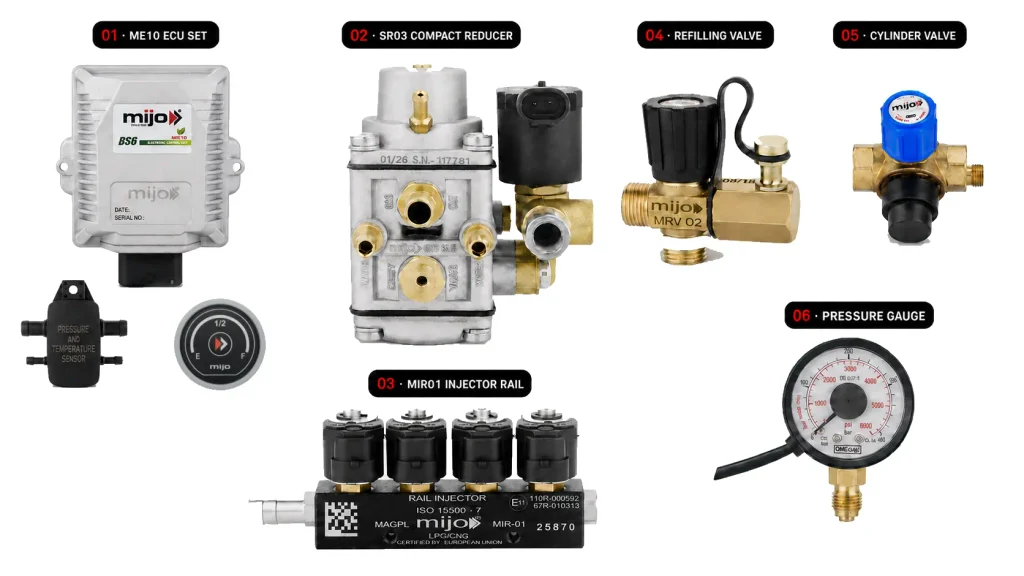
The main components of a sequential CNG kit: (01) ECU set with sensor and switch, (02) SR03 compact reducer, (03) MIR01 injector rail, (04) refilling valve, (05) cylinder valve and (06) pressure gauge.
Image Credit: MIJO Auto Gas.
- CNG cylinder and cylinder valve: the cylinder stores CNG at very high pressure. A properly certified cylinder is built for that pressure and carries pressure-relief safety devices. The valve lets the cylinder be shut off from the rest of the system.
- Refilling valve: the fitting where the CNG nozzle connects at the station.
- Pressure reducer (regulator): the gas cannot go to the engine at cylinder pressure, so the reducer brings it down to a level the injection system can use and keeps the supply steady as engine demand changes.
- ECU and sensors: the ECU decides how much gas each injector delivers, using readings such as gas pressure and temperature. Calibration lives here, which is why a good tune matters as much as good hardware.
- Injector rail: it meters gas separately for each engine cylinder.
- Pressure gauge and fuel switch: these show you the gas level and let you change between petrol and CNG.
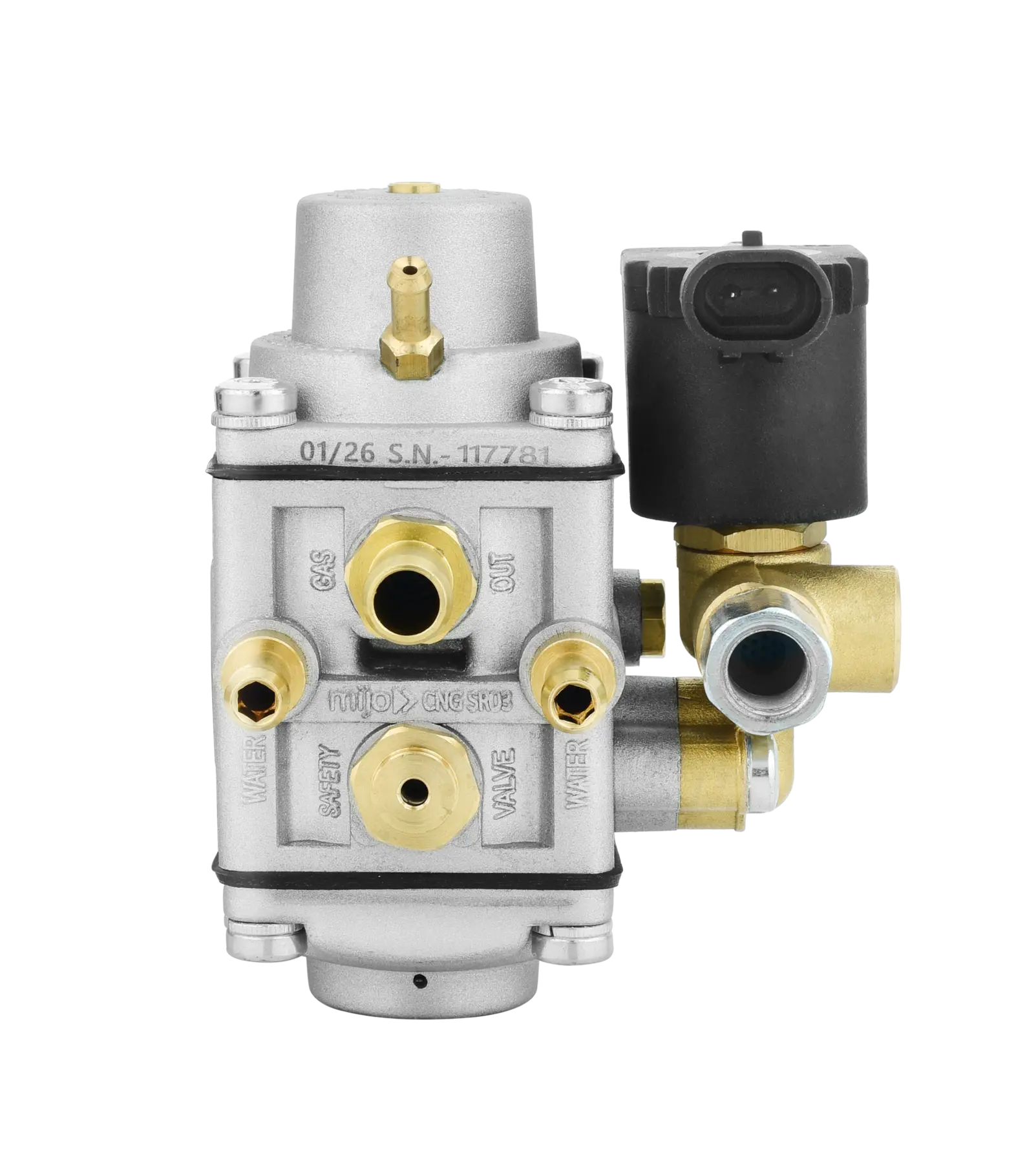
The MIJO SR03 compact reducer. Its ports are marked for gas out and the safety valve, and two water ports carry engine coolant, which keeps the reducer from getting too cold as the gas expands. Most reducers also carry a solenoid valve that stops gas flow when the system is not running on CNG.
Image Credit: MIJO Auto Gas.
A branded component does not by itself make a conversion safe. A genuine reducer or injector rail can still be part of a poorly installed system. That is why you should look at the complete kit, the vehicle-specific approval, the installer, the calibration and the documentation.
What a Good CNG Installation Looks Like
With an aftermarket conversion, the installer becomes a big part of the safety equation. Good workmanship shows up in a few places:
- Cylinder mounting: firmly supported and protected, not just bolted down anywhere
- Gas line routing: clipped, kept away from heat and sharp edges
- Electrical connections: secured and protected, with no loose or exposed wiring
- Heat clearance: parts kept away from hot engine and exhaust components
- Leak testing: carried out after installation
- Calibration: done for your engine, so the car runs smoothly on CNG
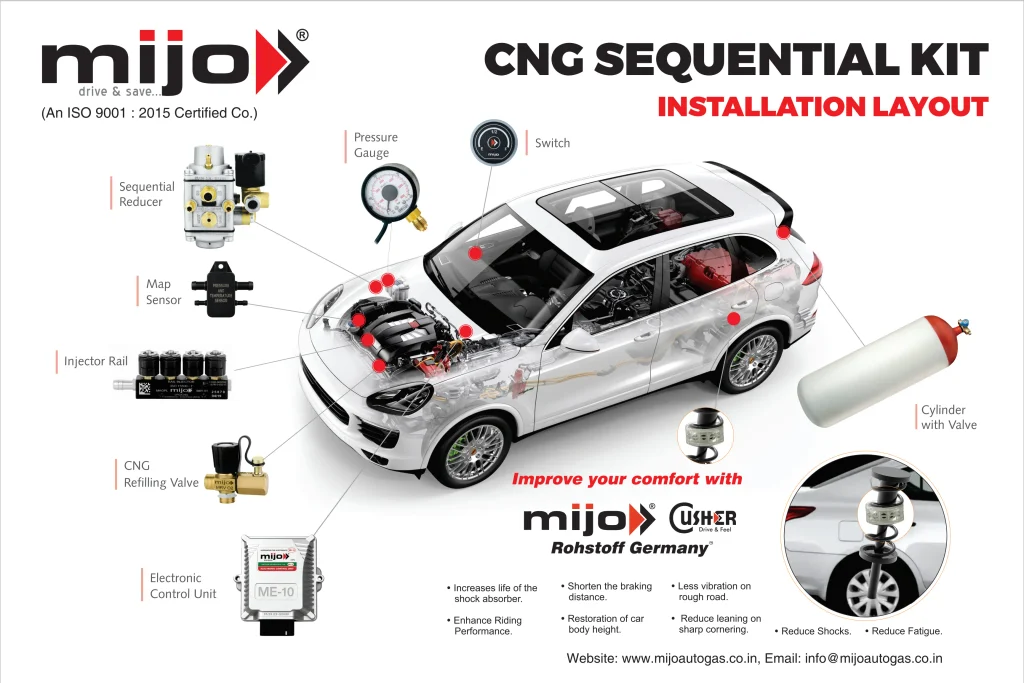
A typical layout of a sequential CNG kit: the cylinder sits towards the rear, gas lines run to the engine bay where the reducer, injector rail and sensors are fitted, and a switch sits in the cabin. The cylinder is shown outside the car for clarity, and layouts vary from car to car.
Image Credit: MIJO Auto Gas.
Here is how that looks in a real car.
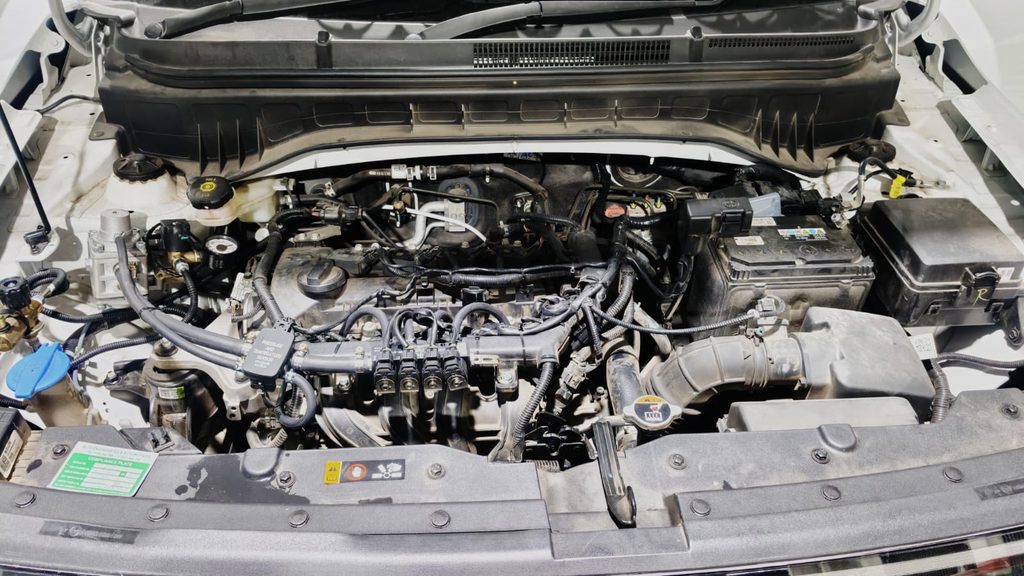
Engine bay of a Hyundai Venue with a retrofitted CNG system. Look for the reducer and gauge at the left, the gas hoses running to each injector, the rail with its pressure and temperature sensor, and the green compliance plate at the bottom left. Neat routing and secured wiring are what you want to see.
Image Credit: MIJO Auto Gas.
Warning Signs of a Poor Conversion
The biggest problems usually appear when the buyer focuses only on the price. A very cheap quote can mean lower-cost parts, no proper calibration or corners cut during installation. Be careful if you see:
- No clear manufacturer name on the kit
- No documentation for your vehicle application
- An installer who cannot say which ECU and reducer will be used
- No proof of component certification
- No leak test
- Poorly routed high-pressure lines or exposed wiring
- A cylinder mounted without proper support
- No clear warranty or paperwork
- Claims that certification is not needed because “the kit is already approved”
The cheapest conversion is not always the cheapest to own. Poor installation or calibration can mean repeated troubleshooting, poor mileage and repair costs.
CNG Certification: Component Approval Is Not Vehicle Approval
A certified component is not the same as an approved conversion for your vehicle. Standards such as ISO 15500 and ECE R110 can apply to individual components like a regulator, injector rail or valve. That tells you about the component, not whether the full system can go into any petrol car.
For retrofits in India, the kit and the vehicle application have to be considered together. AIS-024 sets separate requirements for the CNG kit and the technical specifications of the vehicle being converted, and it covers testing, safety checks and installation requirements. The Central Motor Vehicles Rules also provide for type approval of CNG kits used for retrofitment, and say the work should be done by workshops authorised by the kit manufacturer or supplier.
What to Check Before Installation
Ask the installer for:
- Type-approval documents for the kit and its intended vehicle application
- Confirmation that your exact car, engine and variant are covered
- The approved installation layout, where applicable
- Details of the authorised installer or workshop
- CNG cylinder certification and identification details
- The installation or test certificate and the documents needed to update your registration
For example, the Delhi Transport Department’s current guidance for CNG kit endorsement asks for the kit’s type-approval certificate, retrofitter authorisation, cylinder certificate, approved layout drawings and an installation test certificate. Requirements can vary by registering authority, so check the RTO process for your vehicle.
Warranty, RC Endorsement and Insurance
Warranty: an independent CNG conversion can create warranty complications, especially if a later fault is linked to the fuel system, engine management or wiring. On a new car, get the manufacturer’s or dealer’s warranty position in writing before fitting an aftermarket kit. On an older car already out of warranty, this matters much less.
RC: converting a petrol car to CNG does not end with the installation. The fuel type and related details must be updated through the applicable RTO process. Do not keep driving with a registration that still shows the wrong fuel type. Ask the installer who handles the paperwork and get proof that it is done.
Insurance: after the change, the updated registration and kit documents also need to go to your insurer for endorsement. Ask your insurer what it needs.
Living With a CNG Car
A retrofitted or factory CNG car changes a few daily habits.
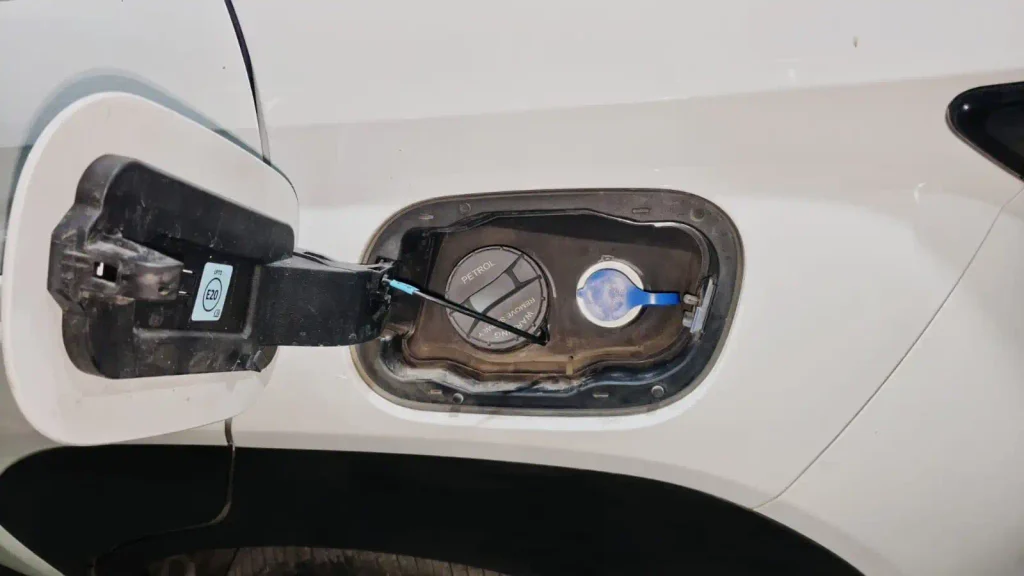
The petrol cap and the blue-capped CNG filling point sit together under one flap on this Hyundai Venue. The E20 label applies to the petrol tank. Image Credit: MIJO Auto Gas.
- Two fuel points: petrol is filled as usual, and CNG goes into the separate filling valve. Switch off the engine before refuelling.
- Fuel switch: many sequential systems start on petrol and change to CNG automatically, and the cabin switch also lets you change fuel manually.
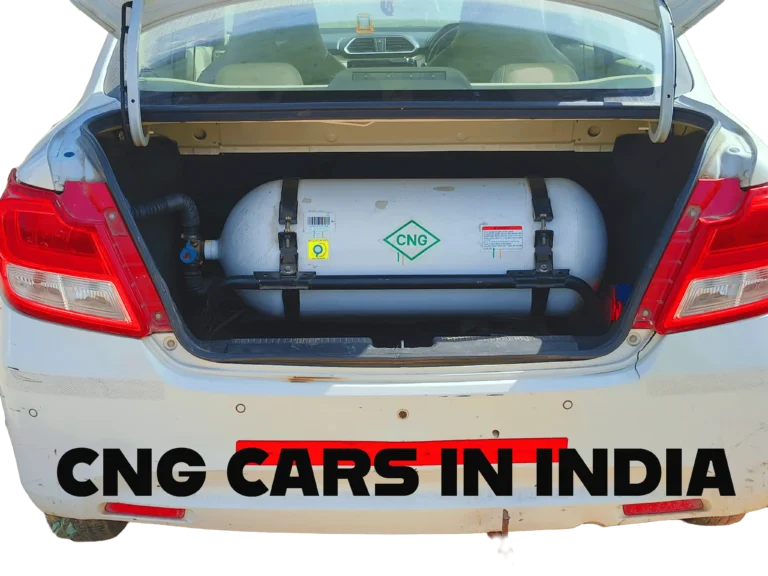
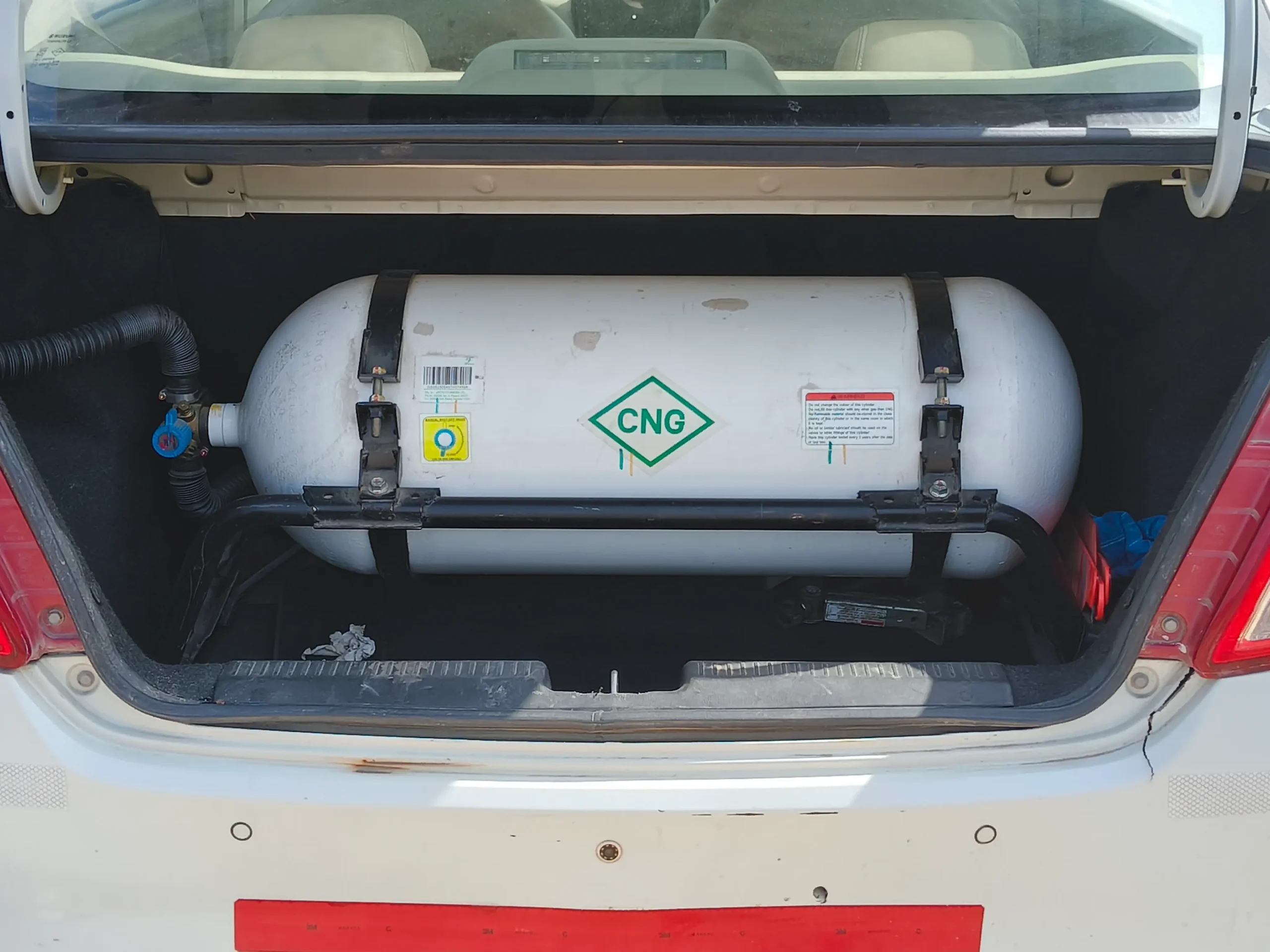
- Boot space: the cylinder often takes some space, depending on the car and layout.
- Servicing: ask for the service schedule, including leak checks, filter changes and cylinder inspection or testing under the applicable rules.
- If you smell gas: park in an open area, switch off the engine and get the system checked before driving on.
Which CNG Option Makes Sense?
- Buying a new car: a factory-fitted CNG car gives the most vehicle-level integration and avoids the uncertainty of a separate retrofit.
- Your preferred car has an authorised dealer retrofit: ask which kit is used, whether it is approved for your exact vehicle and engine, and what warranty remains.
- You own an older petrol car: an aftermarket conversion can make financial sense if you drive enough kilometres and have a reputable, properly equipped installer. Do not choose the installer on price alone.
- You drive very little: the conversion cost may take a long time to recover, so staying on petrol can be simpler.
Still deciding between fuels? Read our guide on petrol vs diesel vs CNG vs EV and our EV vs CNG comparison.
10 Questions to Ask Before Choosing a CNG Installer
- Which CNG kit will you install?
- Which ECU, reducer and injector-rail models are included?
- Is this configuration approved for my exact vehicle and engine?
- Can I see the approval documents?
- Are all components genuine and traceable?
- How will the cylinder be mounted and the high-pressure lines routed?
- What warranty do you give on the kit and the installation?
- Who handles the RC endorsement?
- What maintenance is needed after installation?
- Where can I get the system serviced later?
A good installer should answer all of these clearly.
Final Word
CNG itself is not the problem. The quality of the complete installation is what matters.
A factory-fitted system is designed, integrated and validated with the vehicle. An authorised dealer retrofit is a useful middle ground where the brand supports conversion. An aftermarket system can also work well, especially on an older petrol car, but choosing the right system and installer becomes your responsibility.
Do not judge a CNG conversion by the brand or price of the kit alone. Check the vehicle application, genuine components, approval documents, installation quality, calibration, cylinder condition and registration paperwork.
Frequently Asked Questions
Is an aftermarket CNG kit as safe as a factory-fitted one?
A properly approved aftermarket system can be installed safely, but it does not have the same level of vehicle-level integration as a factory system. Installation quality, calibration and the specific vehicle application matter most.
Does fitting an aftermarket CNG kit void my car’s warranty?
Not necessarily the entire warranty in every case. But a modification can affect coverage for parts or failures linked to the conversion. Check the manufacturer’s warranty terms before installation.
Are all CNG kits approved for all cars?
No. Approval can be vehicle-specific and engine-specific. A certificate for one component does not mean the complete system is approved for every vehicle.
How do I know if a CNG kit is genuine?
Check the manufacturer’s name and component markings, ask for type-approval and cylinder documents, and make sure the installer is authorised by the kit maker or supplier. Buy from an installer who can trace the parts.
What should I check before getting an aftermarket CNG kit installed?
Check the exact kit and component models, vehicle-specific approval, installer credentials, cylinder documents, installation layout, warranty, calibration process and RTO paperwork. Do not choose an installer on price alone.
Can I install a CNG kit on any petrol car?
Not necessarily. It depends on the vehicle, engine, emission standard, approved retrofit system and current rules. Confirm your exact application before installation.
Do I need to tell my insurer after fitting a CNG kit?
Yes, the change should be recorded. Update the RC first, then ask your insurer which documents it needs to endorse the policy.
Does a CNG system need regular checks?
Yes. Ask the installer for the service schedule, including leak checks and cylinder inspection or testing as required under the applicable rules.